

Frequently Asked Questions

-
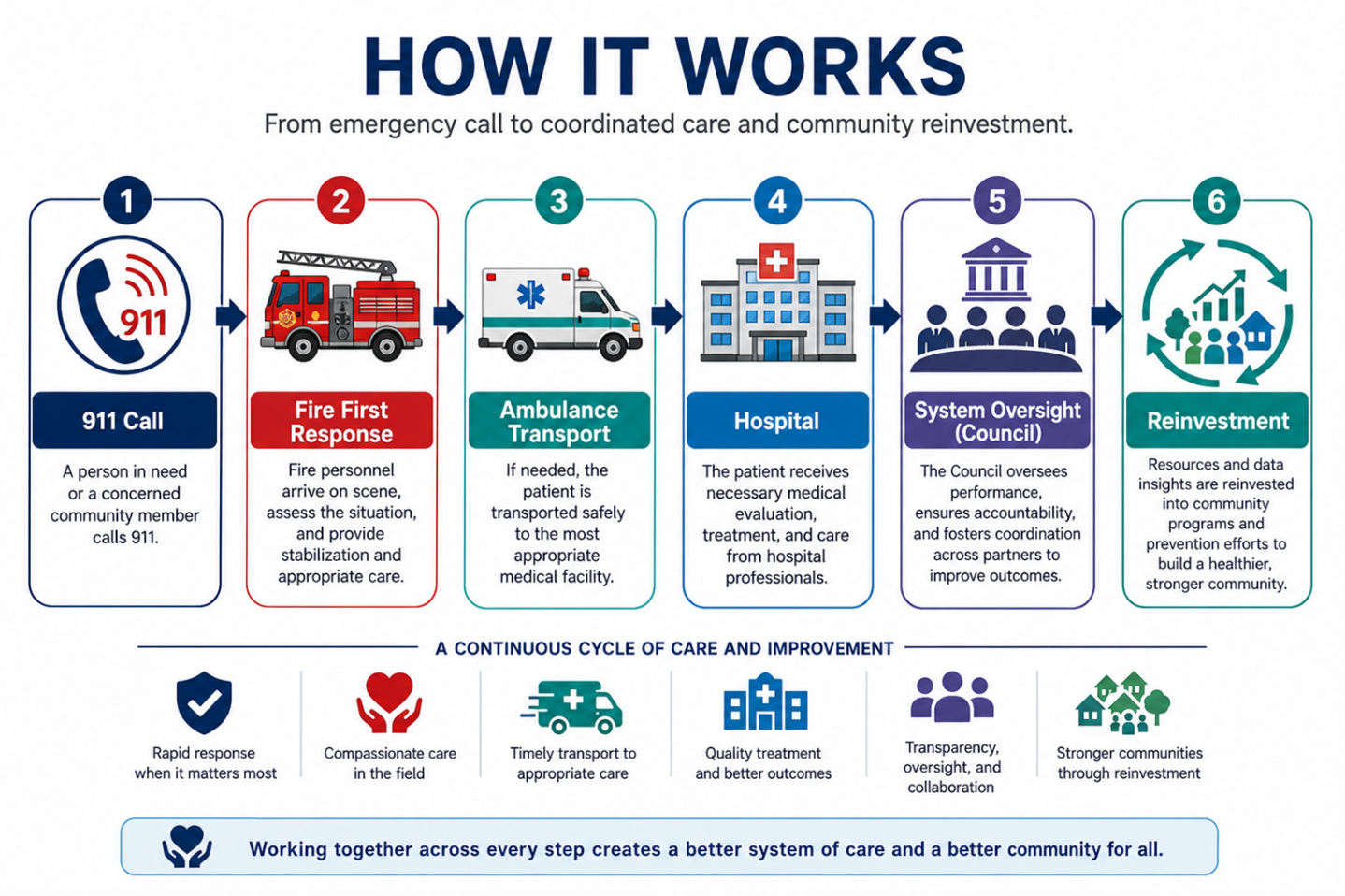
The PPP is a collaborative approach to delivering ambulance services that combines public oversight with private-sector expertise. Local governments provide governance, accountability, and system direction, while a qualified private ambulance provider manages daily operations, including staffing, equipment, and patient care.
-
Residents benefit from faster, more reliable emergency response, high-quality medical care, and a system that is continuously improved through reinvestment. The model ensures that services remain community-focused while leveraging innovation and efficiency from the private sector.
-
The model is designed with performance standards and accountability measures that prioritize timely response. The private partner is held to strict requirements to ensure consistent and reliable service across the county, including rural areas.
-
The PPP model is designed to be financially efficient and sustainable. By combining public oversight with private operational expertise, the system reduces inefficiencies and avoids unnecessary taxpayer burden while maintaining high-quality service.
-
It is both. The system is publicly governed but privately operated. This means the community retains control and accountability, while a professional ambulance provider delivers day-to-day services.
-
All system revenues are carefully monitored. Any funds that exceed the cost of operations are reinvested back into the system. This can include upgrading equipment, enhancing training, expanding services, and improving overall system performance.
-
Although Paso Robles is the lead agency, a Memorandum of Understanding (MOU) between the participating agencies includes the seven cities and defines the governance of SLOCO EMS. This MOU ensures shared input on system operations, transparency in how revenue is reinvested, and oversight by an Advisory Council composed of the seven city managers, to whom the Paso Robles Fire Chief will report.
-
Yes. One of the key advantages of the PPP model is its ability to adapt. The system can evolve to incorporate new technologies, expand services, and respond to changing community health needs over time.
-
The success of our ambulance system is built on the dedication and expertise of the current workforce. These professionals live and work in our communities, provide excellent patient care, and have established strong, seamless working relationships with fire departments across the county. Many are our neighbors, friends, and family members, and their contributions are highly valued.
State law and the Request for Proposals (RFP) require that the incumbent workforce be offered employment with the selected provider, provided they meet standard employment requirements such as background checks. This approach supports continuity of care, preserves local jobs, and ensures that the experience and community connections of these employees remain a vital part of the system moving forward.
-
The system includes strict clinical standards, performance metrics, and continuous oversight. The Advisory Council and EMS leadership regularly review performance data to ensure patients receive safe, effective, and high-quality care.
-
The PPP Model is designed to ensure equitable service across all areas, including rural and underserved communities. System planning and deployment strategies prioritize coverage and access, regardless of location.
-
Local fire departments remain essential partners in emergency response. They often provide first response and work closely with ambulance crews to ensure coordinated, seamless care for patients.
-
Fire departments will only provide surge capacity if they choose to participate in the surge system. Primary ambulance transport will remain the responsibility of the selected private subcontractor.
-
Please use the contact form with questions about ambulance services and system performance.